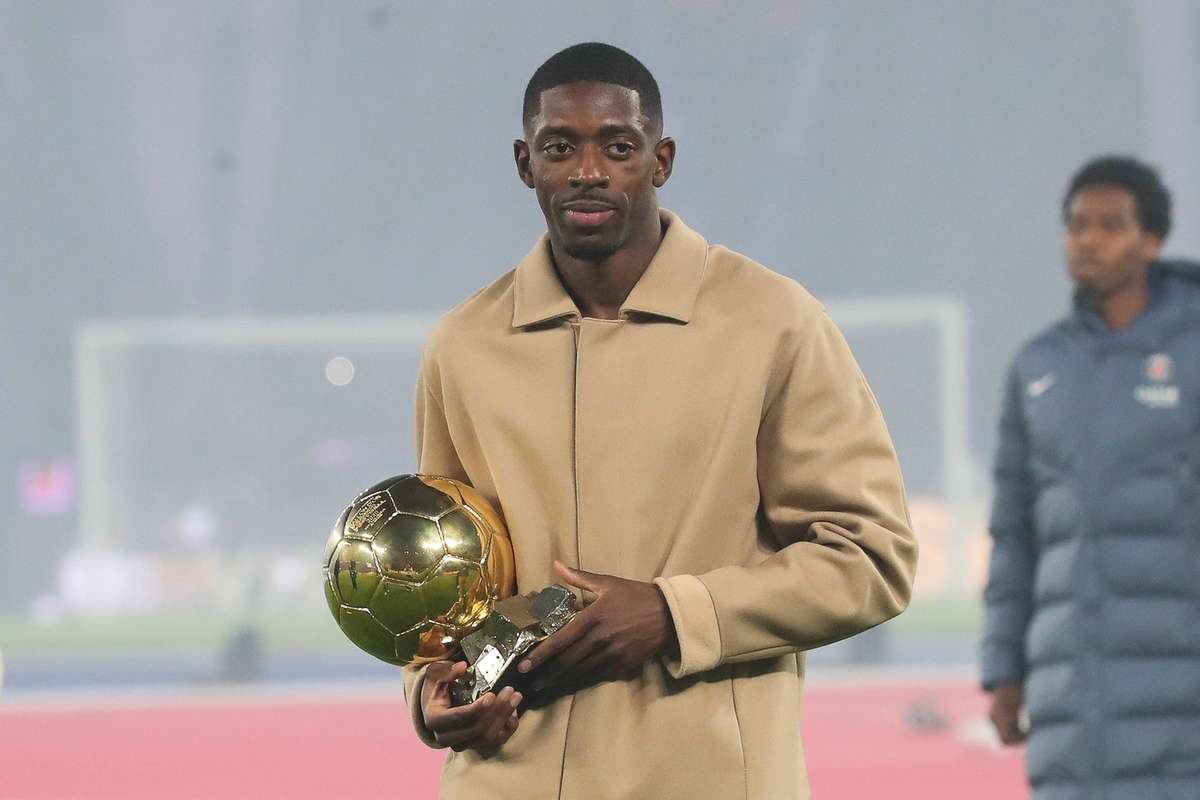
After a spectacular season that saw him win the Ballon d’Or, Ousmane Dembele has been celebrated as the world’s best player. He was instrumental in guiding PSG to a historic treble, securing the Ligue 1, Coupe de France, and Champions League titles. However, former football star Chris Waddle has offered a different perspective, suggesting that Dembele’s week-to-week performance doesn’t always match his top accolades.
🏆 An Unforgettable Season for Dembele
Ousmane Dembele’s performance last season was truly remarkable. The 28-year-old winger clinched the Ballon d’Or ahead of other top talents like Lamine Yamal and his PSG teammate Vitinha. His contributions were vital, especially in Europe, where he scored eight goals in 15 matches. Across all competitions, he tallied an impressive 35 goals and 14 assists, and was also named the UEFA Champions League Player of the Season, cementing his status as a top player.
🤔 Waddle’s Doubts on Consistency
Despite these achievements, former Ligue 1 player Chris Waddle believes Dembele can be very unpredictable. He pointed out the winger’s inconsistent form as a cause for concern. “Dembele is an off-the-cuff player who sometimes dribbles like Messi, but other weeks he looks like a fourth division player,” Waddle commented. “You never know what you’re going to get with him.” This view highlights a debate that has often surrounded the talented French forward.
⚽ Stats vs. Overall Greatness
Waddle also explained his belief that impressive statistics don’t automatically make someone a “great player.” He made a distinction between being a “great goalscorer” and a truly great all-around player like Lionel Messi, whose consistent brilliance set the standard for years. “I think people are too invested in stats,” Waddle said, suggesting that while numbers show a player is good at scoring, they don’t capture the full picture of their overall quality and reliability on the pitch.