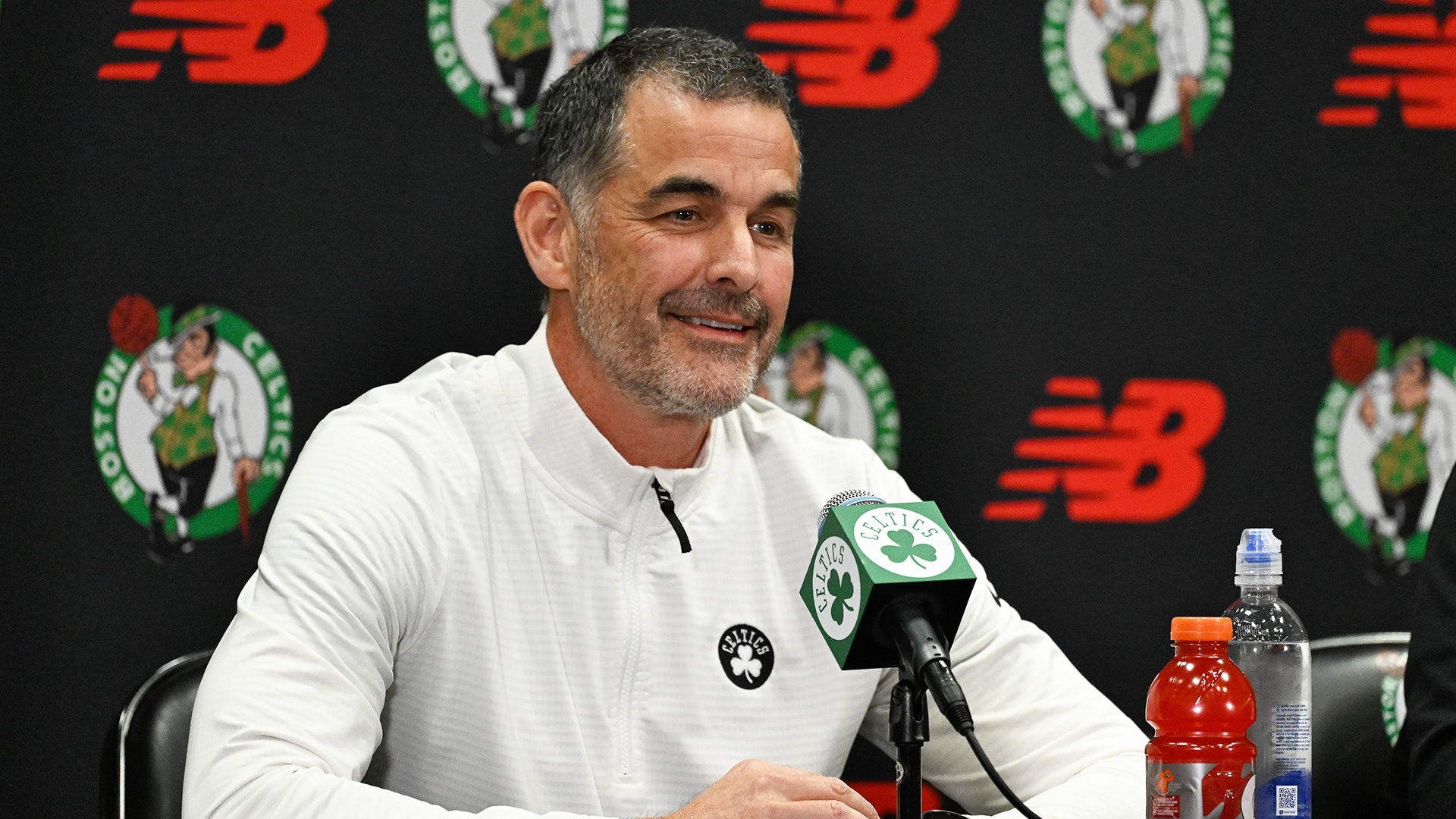
The Boston Celtics have officially welcomed new majority owner Bill Chisholm, who has made a clear commitment: to do whatever it takes to bring more NBA championship banners to Boston. Taking over after the team’s 2024 title win, Chisholm aims to build on that success while ensuring a smooth leadership transition.
As a lifelong fan from Massachusetts, Chisholm expressed his excitement for the opportunity, calling it a “dream come true.” The sale, valued at a record $6.1 billion, marks a new chapter for the historic franchise. However, the new leadership is focused on maintaining stability, with many key figures from the previous ownership and management team remaining in their roles. The primary goal is clear—to continue the Celtics’ legacy of winning.
🤝 A Smooth Transition of Leadership
To ensure continuity, former lead owner Wyc Grousbeck will stay with the team as CEO for the next five years, working “shoulder-to-shoulder” with Chisholm. More than half of the previous ownership group will also remain involved. This means that President of Basketball Operations Brad Stevens, team president Rich Gotham, and coach Joe Mazzulla will continue to guide the team. While Chisholm emphasized that he has the final say as the team’s governor, his plan is to support the successful structure already in place.
🏀 A Vision for Boston Basketball
Beyond winning titles, Chisholm shared his support for bringing a WNBA team to Boston, believing the city is a perfect fit for a women’s professional team. He plans to work with the league to explore this possibility. He also expressed a fondness for the team’s current home, TD Garden, which it shares with the NHL’s Boston Bruins. Citing the strong connection the players and fans have with the arena, Chisholm sees no immediate need for a move, stating, “the Celtics and the Bruins belong together.”
💰 Navigating Future Challenges
The road ahead presents some obstacles. Star player Jayson Tatum is currently recovering from surgery on a ruptured Achilles tendon. Additionally, the team faces challenges from the NBA’s strict salary cap rules. To avoid severe roster-building restrictions imposed by the “second apron” of the luxury tax, the Celtics recently traded key 2024 title contributors Jrue Holiday and Kristaps Porzingis. Management explained that these tough decisions were necessary to maintain future flexibility, as the same rules would have prevented them from acquiring those players in the first place.